

TL;DR:
A stump can often be ground close to a fence, but there is no universal minimum clearance. The space required depends on the grinder, access route, stump size, fence construction, and surrounding conditions.
Generally, it can be ground within a few feet of a fence, with roughly 3-5 feet of working clearance.
- A site assessment helps determine the working position.
- A compact stump grinder can help in restricted spaces.
- Roots near fence posts deserve attention.
- Pricing depends on size, access, depth, and cleanup.
- Professional service can limit disturbance around fencing.
A stump sitting inches from a fence can be a headache for Utah property owners. It takes up usable yard space, can interfere with mowing and landscaping, and may become a place for weeds, pests, or new growth to develop

Understandably, you want it gone without damaging the fence. This is why stump grinding near a fence requires careful planning.
Stump grinding involves specialized equipment that needs enough room to reach the stump and operate safely around nearby structures. For example, a cedar privacy fence with concrete footings presents different working conditions than a chain-link fence with steel posts. The required clearance also depends on the stump’s location, fence construction, available access, and grinder size.
This blog covers clearance, equipment, costs, and when professional help may make sense.
Quick Insight: The closest possible grinding distance is not determined by the stump alone. The fence type, equipment movement, access route, and condition of the surrounding area all influence what approach is safest.
How Close Can Stump Grinding Be Done to a Fence?
A stump can sometimes be ground 3-5 feet from a fence, although the space needed depends on the working conditions at the site. A stump beside a sturdy privacy fence may be easier to access than one next to a delicate garden fence or a fence with concrete-set posts.
That difference matters because the grinder needs enough room to approach the stump, move across its surface, and grind below grade. Fence posts also need extra attention, since roots can extend beneath their footings and affect how closely the stump can be ground.
What Determines the Safe Grinding Distance?
Here are some of the factors that affect the working distance:
- Stump size and position
- Fence material and condition
- Gate and side-yard access
- Nearby utilities or irrigation
- Roots and exposed root flare
- Grinder size
Planning Tip: Before scheduling stump grinding, consider what will happen after the stump is removed. Whether you plan to install landscaping, repair fencing, or expand usable yard space can influence the recommended grinding depth and cleanup approach.
Can Stump Grinding Damage a Fence?
Stump grinding involves powerful cutting equipment operating close to a fixed structure, so the fence should be inspected before work begins. Direct contact with the grinder is an obvious concern, while flying wood chips, loose soil, vibration, and restricted visibility can also affect how the work is carried out.
Roots deserve attention as well, particularly when there are signs of tree roots damaging the fence. If you notice such areas, look at the posts, surrounding soil, drainage, and root position together. Soil settlement, poor drainage, deteriorating posts, installation problems, and age can produce similar signs.
Checking these factors can help determine whether roots are actually contributing to the fence damage.
Fence Assessment Tip: Before grinding begins, check whether the fence is already leaning, loose, or showing signs of age. Existing weakness can make it harder to determine whether any movement comes from roots, soil conditions, or the removal process.
What About Roots Growing Under the Fence?
Roots can extend beyond the visible stump, especially when a tree grew close to a property boundary. Larger roots may run beneath the fence or close to post footings, which can affect how the stump should be removed.
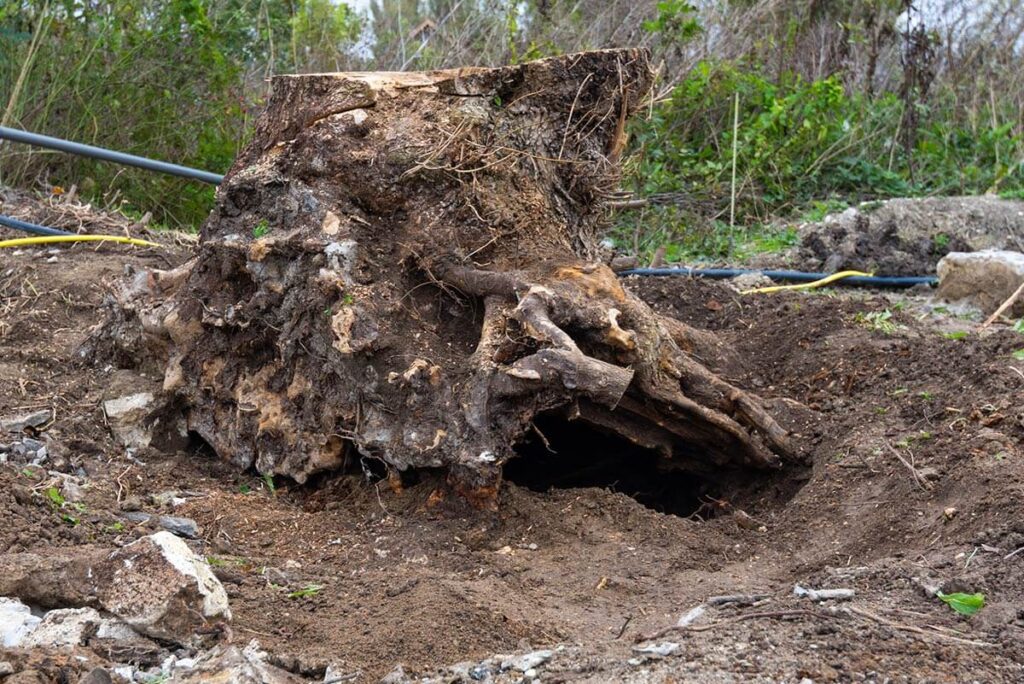
That does not mean every root needs to be excavated. Stump grinding can remove the visible stump while leaving much of the underground root system to decay naturally. Extensive excavation may instead disturb more soil around the fence and its posts.
Warning Signs: A leaning fence, raised soil, exposed roots, cracked concrete around a post, or a stump pressing against the fence deserves a closer inspection before grinding. These signs can help identify possible tree roots damaging fence areas and determine whether additional care is needed.
Why a Compact Stump Grinder Can Help in Tight Spaces
A compact stump grinder can be a practical choice for restricted residential areas. Smaller machines can fit through narrow gates and around landscaping, making them useful when a stump sits in a fenced backyard.
Larger grinders can remove stumps faster, but they need more space to enter, turn and operate. Choosing the smallest machine is not always better, either. The right equipment depends on the stump size, access route, ground conditions, and nearby structures.
The access path should be assessed before equipment arrives. Gate width, slopes, turning space, and nearby landscaping can determine which grinder can reach the stump without damaging the property.
The grinding process also leaves behind wood chips that can be cleared away or used as mulch in suitable areas of the property.
Good to Know: A smaller grinder can make tight-access projects easier, but the right equipment depends on the stump, access route, surrounding structures, and grinding requirements.
What Does Stump Grinding Near a Fence Cost?
The cost of stump grinding varies by project.
According to Angi, standard stump grinding typically costs about $150 to $500 per stump, with easily accessible stumps generally falling toward the lower end of that range. When a stump is close to a fence or other permanent structure, tight access and additional care may add $50 to $150+ to the base cost, depending on the equipment and working conditions.
However, several factors can affect the final price, such as:
- Stump diameter
- Number of stumps
- Accessibility
- Grinding depth
- Root flare or exposed roots
- Cleanup and chip removal
- Proximity to fencing or other structures
Cost Factor: A restricted work area can require additional planning compared with an isolated stump in an open yard, which may increase the total cost.
Is Residential Stump Grinding Safe Near a Fence?
Residential stump grinding near a fence can be done safely with proper site preparation. Before work begins, the operator should assess access, the fence, nearby obstacles, and equipment. A small stump can still be challenging if it sits against a fence corner or near irrigation lines. The stump’s size is only one factor.
What Should Be Checked Before Grinding?
- Fence posts and footings
- Gates and access points
- Irrigation and utility lines
- Nearby landscaping
- Damaged or loose fencing
- Stump and root position
Safety Check: Assessing the area first helps the operator choose suitable equipment and a safe work method
When Should You Hire Professional Stump Grinding Services?
A stump directly beside a fence is a strong reason to consider professional stump grinding services, particularly when access or surrounding conditions make the job harder.
Consider professional help when the site has:
- A narrow gate or restricted access
- A large stump with a broad root flare
- Extensive roots near footings
- Fragile, damaged or leaning fencing
- Sloped or uneven terrain
- Nearby sheds, retaining walls or other structures
Working around a fence requires control and experience. Operators need to position the grinder carefully, manage flying debris, and avoid unnecessary contact with the fence. They can also explain what happens to the remaining roots and how the ground may settle afterward.
Pro Tip: If there is barely enough room to reach the stump without contacting the fence, have the site assessed before attempting DIY grinding.
What About Residential Stump Grinding in Utah?
Utah properties can have fenced side yards, landscaped lots, slopes, narrow access points, and established residential features. Each condition can affect how the stump is accessed and which equipment is suitable.
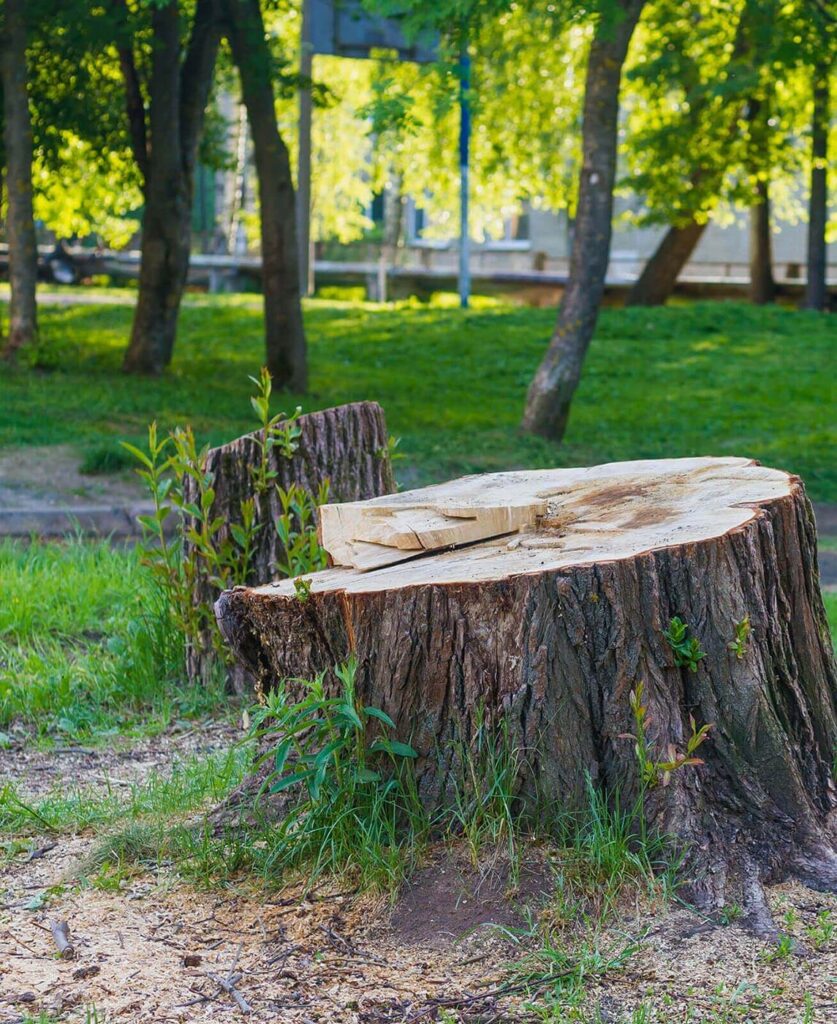
For residential stump grinding in Utah, let the crew know about irrigation lines, utility locations, fragile fencing, gates, and planned landscaping before work begins. StumpX serves property owners from Bountiful to Santaquin, with a focus on careful work, clear homeowner guidance, and thorough service
How to Prepare Your Fence and Yard for Stump Grinding
Homeowners can prepare the work area by:
- Moving furniture, toys, tools, and decorations away from the stump.
- Keeping children and pets away from the work zone.
- Clearing the route from the driveway or gate to the stump.
- Pointing out irrigation lines and known underground features.
- Telling the crew about fragile or damaged fencing.
- Discussing chip cleanup before work begins.
Before the Crew Arrives: Clear the stump area and communicate known underground lines, irrigation systems, fragile fencing, or access restrictions.
Can You Grind a Stump Yourself Next to a Fence?
Walk-behind rental machines accounted for 31.8% of the stump grinder rental product segment in 2026, showing how common these smaller machines are for stump-removal work.
That doesn’t mean every stump is suitable for DIY grinding. A stump beside a fence leaves less room to maneuver, while limited visibility, flying debris, machine control, and fence clearance can make the job harder for a first-time operator.
When there is very little space between the stump and fence, professional help can be a practical option. A tighter work area leaves less room for mistakes that could damage the fence or surrounding property.
DIY Reality Check: Equipment availability does not always equal a simple project. Working close to fences requires controlling the machine, managing debris, and maintaining enough clearance to avoid accidental damage.
Give Your Fence and Landscape More Room
A stump doesn’t need to be far from a fence for grinding to be possible. What matters is having enough working space for the equipment while accounting for the stump’s size, fence construction, access route, root growth, and nearby property features.
In tighter spaces, a smaller grinder may provide better access and control. Before work begins, a site assessment can also identify potential concerns around fence posts, footings, and underground roots, helping determine the right way to approach the stump.
Landscape Planning Tip: Removing a stump can create an opportunity to redesign the area, but planning ahead helps avoid future conflicts. Consider how new plants, structures, or hardscaping may interact with remaining roots and soil conditions.
At StumpX, we combine professional stump grinding with careful site preparation and homeowner education. Serving properties from Bountiful to Santaquin, our team assesses each project, explains what the work involves, and takes the time to avoid unnecessary risks or shortcuts.
Contact us today for more details!
Frequently Asked Questions About Stump Grinding Near a Fence
1. How close can a stump grinder get to a fence?
The workable distance depends on the stump, fence, access route, equipment, and surrounding obstacles. A professional assessment can determine how the machine can be positioned.
2. Can stump grinding damage a fence?
Equipment contact, debris, or vibration may create concerns when grinding close to fencing, especially when posts or panels are weak. Site preparation and suitable equipment can reduce unnecessary disturbance.
3. Can roots from a stump damage a fence?
Roots can affect soil around fence posts, but they are not automatically the cause of fence movement. Soil conditions, drainage, aging materials, and installation issues can also contribute.
4. Is smaller grinding equipment better for grinding near a fence?
Smaller grinding equipment can be useful where access is limited. The appropriate equipment still depends on the stump and site conditions.
5. How much does it cost to grind a stump next to a fence?
Pricing varies based on stump size, accessibility, grinding depth, cleanup, and nearby structures. A project-specific estimate can provide a more accurate figure.