

TL;DR:
- Stump grinding can damage buried sprinkler lines when pipes sit close to the stump or within the grinding area.
- Several stump grinder safety tips can reduce risks before equipment arrives, including identifying irrigation components and clearing the work area.
- Pipe depth, root spread, stump size, and irrigation layout affect the potential for damage.
- Homeowners should test irrigation zones after grinding and watch for leaks, weak pressure, or damaged sprinkler heads.
- Professional planning can help protect irrigation while preparing the yard for its next use.
A tree stump may look easy to remove; however, the soil around it can contain sprinkler pipes, valve boxes, wiring, and other irrigation components. That makes stump grinding near an irrigation system a job that calls for some preparation.
What appears to be open ground may have important sprinkler infrastructure just beneath it.
This matters even more during Utah’s dry summers, when irrigation systems help keep lawns green. KSL reported in June 2025 that 85% of the state was in moderate or severe drought, while Utah’s Division of Water Resources reported 91% in July. With water resources under pressure, avoiding preventable irrigation leaks can make a difference during the watering season.
So, whether a stump is in Bountiful, Santaquin, or elsewhere in Utah, knowing where irrigation lines run can help prevent unnecessary damage. The sections below explain which components face the most risk and what you can do before and after grinding to keep the system working properly.
In Short: Stump grinding does not automatically damage irrigation. The risk rises when buried components are close to the stump, and their locations are unknown.
Why Stump Grinding Can Affect Underground Irrigation
A stump grinder uses a rotating cutting wheel to break down the stump and grind wood and roots beneath the soil. While the machine works within a defined area, the root system can spread well beyond what is visible above ground. If an irrigation line runs through that zone, it may be damaged when its exact location is unknown.
The risk can be harder to assess with older irrigation systems. Missing installation records, changes to the landscape, and root growth can make buried pipes and wiring more difficult to locate. A quick check of the area before grinding can help identify where these components may be running.
What to Know: The visible stump is only part of the work area. Nearby roots, irrigation components, and equipment access should all be considered before grinding begins.
What Irrigation Components Could Be at Risk?
Several parts of an irrigation system can be affected during stump removal, depending on where they are located around the stump. Here are the main components to check before grinding begins:
Common Misconception: Sprinkler heads are not the only concern. Underground pipes, valve boxes, and control wires can also be affected even when no irrigation components are visible above ground.
Sprinkler and Irrigation Pipes
Lateral lines carry water from valves to sprinkler heads. If one passes beside or beneath a stump, grinding can damage the pipe if the cutting area reaches it. A connection weakened by age or previous repairs may also need attention.
Sprinkler Heads and Valve Boxes
A sprinkler head close to the stump can be disturbed during grinding or cleanup. Afterward, it may sit crooked, fail to rise, spray in an unusual direction, or remain buried beneath loose material.
Valve boxes also deserve attention. Equipment passing over a box can shift surrounding soil or place pressure on components inside.
Irrigation Control Wires
Automatic systems use low-voltage wiring to communicate between the controller and irrigation valves. A damaged wire can stop one zone from operating even when the water pipe itself is intact.
Quick Check: Look for sprinkler heads, valve boxes, drip tubing, and known irrigation wiring around the stump. Tell the crew about anything located nearby.
How to Tell if Irrigation Lines May Be Near the Stump
A quick inspection can reveal useful clues about where buried irrigation components may be located before tree stump grinding. Here is a list that can help:
- Check nearby sprinkler heads: Their positions can give you an idea of how irrigation lines may run around the stump.
- Look for valve boxes and drip tubing: Visible irrigation equipment can help identify parts of the system that may extend into the grinding area.
- Watch for unusually green grass: A greener patch near the stump could indicate extra moisture from a slow irrigation leak, although drainage can cause similar patterns.
- Check for soft or wet soil: Unexpected moisture around the stump may be another sign of a buried irrigation issue.
- Mark anything unusual: Point out wet spots, damaged areas, or visible irrigation components to the grinding crew before work begins.
Pro Tip: Take photos of the stump and nearby irrigation features before the appointment. They provide a simple record of the work area.
How to Protect Irrigation Pipes Before Stump Grinding
Protecting the irrigation system starts before the grinder reaches the stump. Do these to help the crew identify potential hazards and plan the work accordingly:
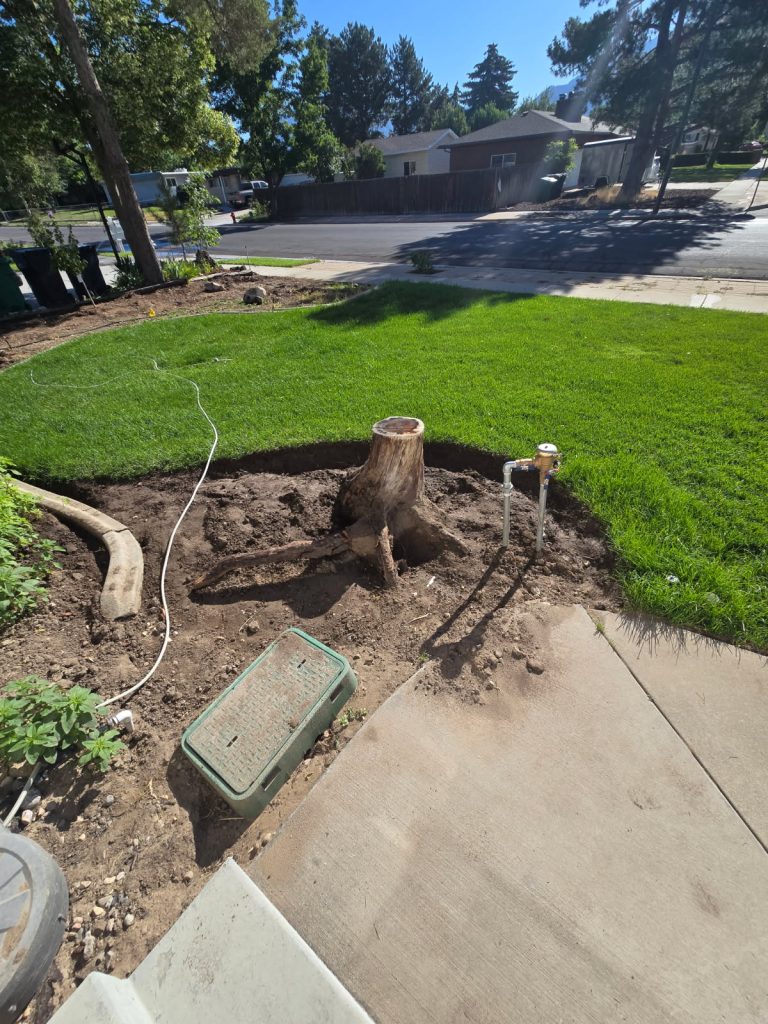
Mark Sprinkler Heads and Valve Locations
Use bright flags or temporary markers to identify sprinkler heads, valve boxes, drip zones, and other visible features. Place markers where they will remain visible without creating an obstacle for the crew.
Share Your Irrigation Layout
Tell the stump grinding contractor about known pipes, wires, sprinkler heads, valves, and previous repairs. This information can help the crew assess equipment access and plan the work around known features.
Discuss Grinding Depth in Advance
Tree stump grinding depth varies with the stump, equipment, site conditions, and the intended use of the area afterward. Ask how the crew plans to handle the stump if an irrigation line is suspected near the cutting area. The work plan may need to account for its location rather than assuming buried components are exactly where expected.
Safety Tip: Tell the crew about irrigation before equipment arrives. Details about pipes, valves, and past repairs can help with job planning.
What Stump Grinder Safety Tips Should Homeowners Know?
Keeping the work area clear and giving the grinding crew enough room can help reduce hazards around the stump:
- Keep people away: Children, pets, and bystanders should remain outside the work zone.
- Clear the area: Remove toys, tools, branches, rocks, and other loose items near the stump.
- Give the crew space: Keep vehicles and other obstacles away so the equipment has room to operate.
- Stay clear of the machine: Homeowners should not approach or operate the grinder while it is running.
- Follow basic stump grinder safety tips: Remain at a safe distance and follow any instructions provided by the grinding crew.
Safety Reminder: Stay away from operating equipment and give the crew enough room to work without interruptions.
Can a Stump Grinding Contractor Guarantee That Pipes Won’t Be Damaged?
The safest way to approach the job is to recognize that buried irrigation components may not always be visible or accurately mapped. An experienced stump grinding contractor can work from the information available and adjust the plan around known lines, though soil conditions can make exact pipe locations difficult to confirm.
Irrigation systems can also differ in installation depth and condition. Tree roots, previous repairs, shifting soil, and outdated property records may all affect where a pipe is found. A line originally installed at twelve inches, for example, may sit closer to the surface after years of soil movement.
Reasonable expectations from a professional include:
- Clear communication: Discuss known irrigation components before and during the work.
- A proper site inspection: Assess the stump and surrounding area rather than relying on a quick visual check.
- Care around marked areas: Use practical precautions near identified pipes, valves, and wiring.
- Communication about surprises: Discuss any buried components or unexpected conditions discovered during grinding.
What to Expect: Planning can lower the chance of irrigation damage, although underground work carries some uncertainty when the location of buried lines is not known.
How to Check Your Irrigation System After Grinding
After cleanup, run each irrigation zone and inspect the area around the stump. Do not check only the sprinkler closest to the work area. A shared line, valve, or control wire can affect other parts of the system.
Watch for sprinkler heads that fail to rise, weak pressure, unusual spray patterns, pooling water, bubbling soil, or a zone that does not activate.
If you see a clear leak, shut off the affected irrigation zone and contact an irrigation professional for diagnosis and repair.
After the Job: Test the system after cleanup and inspect the stump area again during the next watering cycle.
Choose a Stump Grinding Service That Plans Around Your Property
Irrigation lines, worksite conditions, grinding depth, equipment checks, and stump grinding safety all deserve attention before the grinder is used. A well-planned job starts with knowing what lies around the stump and taking practical steps to limit damage.
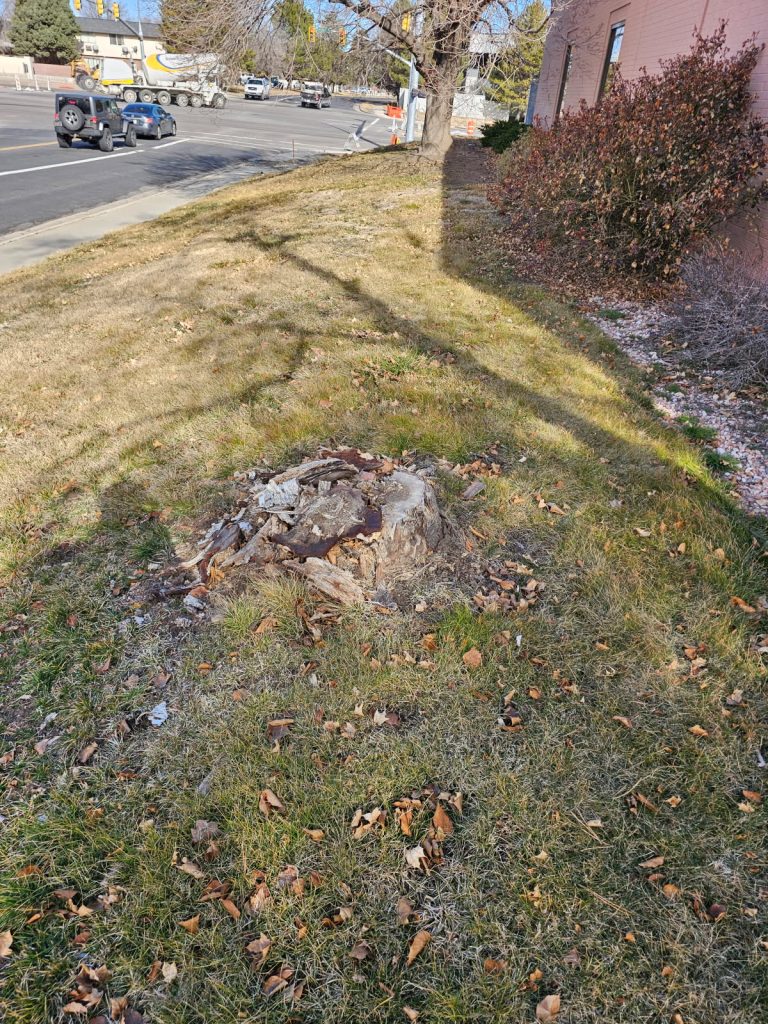
A careful work process can include:
- Checking for buried components: Identify possible pipes, wires, valves, and other irrigation features near the stump.
- Preparing the area: Remove objects and obstacles that could interfere with the equipment.
- Inspecting the grinder: Check the machine and cutting wheel before use.
- Protecting nearby components: Take reasonable precautions around identified irrigation equipment.
- Keeping homeowners informed: Explain relevant findings and any changes to the planned work.
Maintenance Reminder: Keeping updated irrigation records can make future landscaping, tree removal, and outdoor projects easier by reducing uncertainty around buried systems.
Protect Your Irrigation While Clearing the Stump
Removing a stump near an irrigation system calls for more than simply bringing in a grinder and clearing the wood. Buried sprinkler pipes, wiring, and valves may sit close to the stump, so checking the area beforehand can help prevent avoidable problems.
Mark visible components, share any details you have about the irrigation layout, and discuss the planned grinding depth with the crew. Afterward, run the sprinkler system and check for leaks, reduced pressure, or heads that no longer operate correctly. These checks support stump grinding safety while helping identify any irrigation issues early.
Post-Service Tip: Do not wait until a major watering cycle to notice problems. Testing irrigation shortly after grinding allows small issues to be identified before they affect larger areas of the landscape.
At StumpX, the condition and layout of the surrounding yard are considered as part of the grinding plan. If a stump sits near your sprinkler system, our team can review the work area, discuss potential concerns, and determine what information may be useful before the grinder is used.
Contact us today for more details!
FAQs About Stump Grinding and Irrigation Pipes
1. Can a stump grinder cut through underground sprinkler pipes?
Yes. If a pipe sits within the cutting area, the grinder can damage it. The risk depends on the pipe location, depth, stump size, and work plan.
2. How deep should sprinkler lines be before stump grinding?
There is no single depth that makes every irrigation line safe from grinding. The appropriate plan depends on the line location and how deeply the stump needs to be ground.
3. Should I turn off my irrigation system before stump grinding?
Yes. Turning the system off prevents watering during active work and makes it easier to inspect the system afterward.
4. How can I locate irrigation pipes near a tree stump?
Start with irrigation plans, visible heads, valve boxes, controller zones, and previous repair records. If the layout remains uncertain, an irrigation professional can help locate components.
5. What should I do if my sprinkler system stops working after stump grinding?
Check each zone for damaged heads, leaks, unusual pressure, or control issues. If a problem remains, shut off the affected zone and have the irrigation system inspected.